CAREA products can be installed using two different systems to create thermal insulation from the outside, either for the renovation of existing structures or for new construction.
The Cladding without backing structure (CWoB) system
Cladding without backing structure (CWoB) systems are exterior thermal insulation systems covered by Avis Techniques. Cladding without backing structure can also be referred to as “vêture” or “vêtage”.
CWoB elements are installed directly on the supporting structure (whether insulated or not), using mechanical fasteners (through-pegs, brackets, insertion into a rail, etc.).
Installation is carried out in a single operation.
Load-bearing structures are made of masonry units, solid concrete or Timber frame construction (Timber frame construction). On this page, we have described the different types of support.
In the case of an insulated load-bearing structure, this insulation is :
or new construction insulation using insulation boards with a minimum ACERMI rating (rating defined in the Avis Techniques and varying according to the type of insulation),
or old insulation with thin or thick rendering over insulation.
Highlights:
Direct installation on the building’s load-bearing structure.
No framework fixed to the load-bearing wall: economical solution in terms of supply and installation time (4 to 6 m² per hour). Work possible in all weathers.
In the case of renovation, CWoB can be installed on previous insulation (ITE) covered with thin or thick plaster, or even on previous insulated cladding.
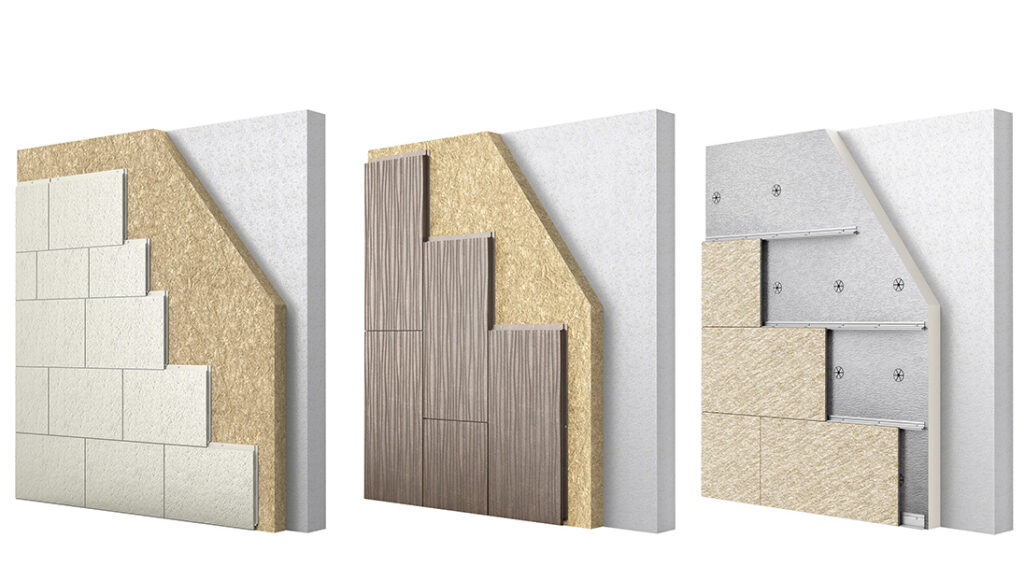
Cladding without backing structure. In this order: Interlocking cladding horizontal, Interlocking cladding vertical, Grooved cladding horizontal.
Details of our systems by cladding type can be found on this page in our Avis Techniques (ATec).
Insulated cladding installation
As part of a renovation project, to reduce carbon footprint and cut energy consumption, the CWoB system can also be installed over existing plaster (EMI) or previous cladding, without removing the latter: the frameless cladding fastener passes through the plaster or previous cladding (cladding and insulation) to be fixed in the substrate behind.
In addition to being more eco-responsible, this system is highly economical: it saves the time involved in removing the old insulated cladding or insulation, and avoids the issues of on-site waste management and recycling of the old façade, which is ” recycled in situ “: the old system remains in place under the new façade, retaining its insulating properties.
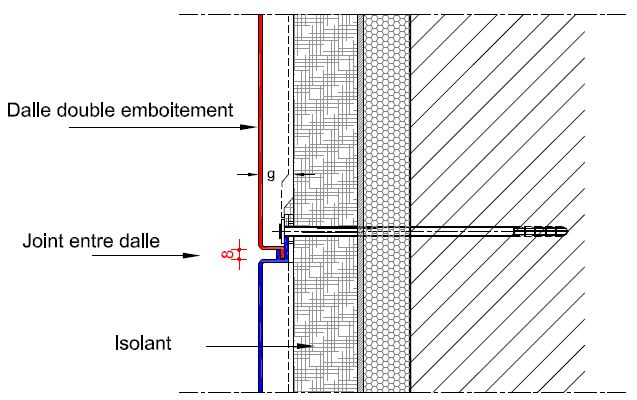
Schematic diagram of thin plaster over insulation (EMI) installation
The Cladding with backing structure (CWB) system
Cladding with backing structure (CWB) is an external thermal insulation (E.T.I.) system, consisting of cladding panels fixed to a backing structure which is itself attached to the supporting wall. Additional insulation is installed between the shell and the Cladding skin, and is ventilated by the air gap between the insulation and the back of the slabs.
Over the entire height of the Cladding, a ventilated air space of at least 20 mm is left between the back of the cladding panels and the insulation.
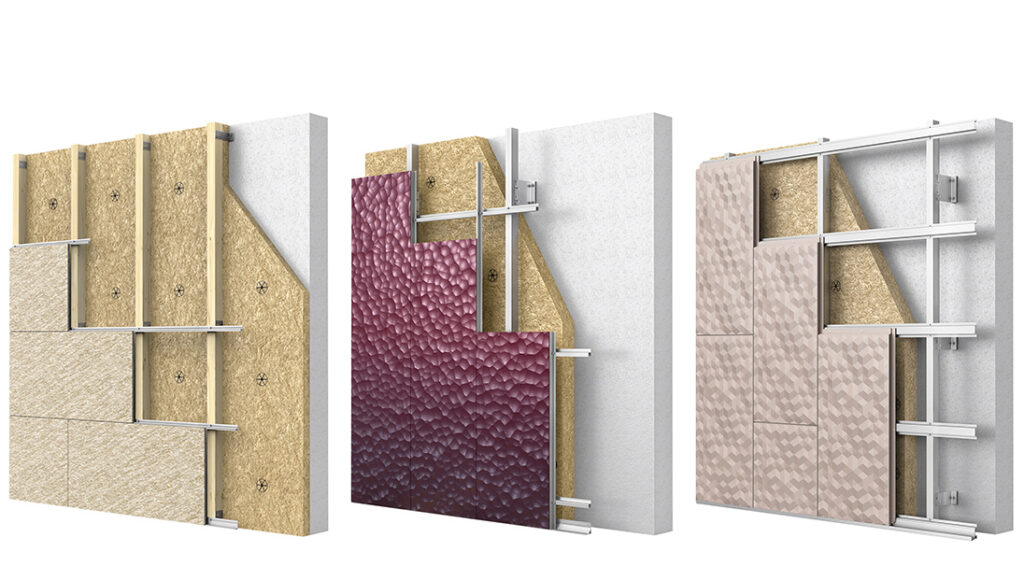
In order: Cladding with wood backing structure (grooved cladding), Cladding with metal backing structure (grooved cladding), Cladding with metal backing structure (interlocking cladding).
Find out more about the different types of cladding on this page.
This site is registered on wpml.org as a development site. Switch to a production site key to remove this banner.